The 2026 Northern Rockies Wilderness Skills Institute will be held from May 18 – 22, 2026. Sessions will start at 11 AM PT on Monday and conclude at 12 PM PT on Friday. To allow for flexibility in sessions this year you are allowed to register for one session on Monday and Tuesday, and one session on Wednesday, Thursday, and Friday. You must register for two sessions and stay for the entire week. The exception to this is the Crosscut Saw C- Recertification and Host A/B Course and Advanced Trail Maintenance courses which are week-long.
COST: There is no cost to attend.
FOOD: On your own – no food provided. Participants will handle their own meals. Cooking facilities may be provided – more information will be provided ahead of the event.
Registration will close on April 22, 2026. It is strongly recommended that you register as early as possible as class sizes may be limited.
ATTENDANCE PREREQUISITE:
- Arthur Carhart National Wilderness Training class “Wilderness Act of 1964” online class – The Wilderness Act of 1964 – Arthur Carhart National Wilderness Training Center (iu.edu)
This online course is recommended to be taken before attending the Northern Rockies Wilderness Skills Institute but is optional. This is a free class, which includes reading short narratives, listening to audio, interactive graphics, and quizzes. The purpose of The Wilderness Act of 1964 course is to acquaint you with the contents of this law and equip you to consider its impact in managing a wilderness area; this is foundational material relevant to everyone working in wilderness stewardship. We have designed the sessions at the Wilderness Skills Institute assuming you have already taken this class and have learned this foundational material. Feedback from past students has shown that most people prefer to take this class on their own before the full session, so that they can go at their own pace and have time to reflect on what they learned. The average time it takes students is 2.5 hours. You can stop and start the class anytime you want – you don’t have to take it all at once. Once at the Wilderness Skills Institute, please be prepared to discuss what you learned from the class, what surprised you, and what was the most important thing you got from the curriculum.
SCHEDULE:
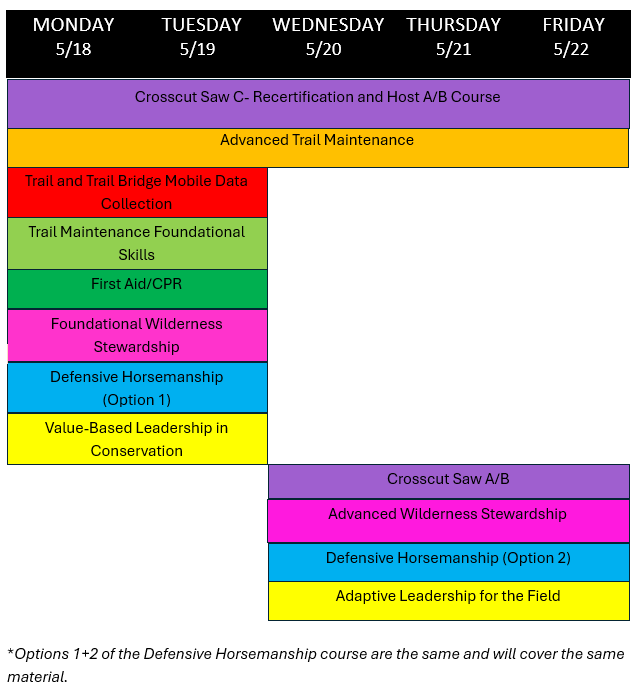
WEEK-LONG SESSION:
- Crosscut Saw C- Recertification and Host A/B Course
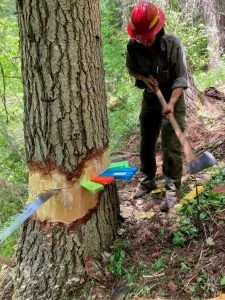
- Lead Instructor: Adam Washebek
- Required Prerequisite: Prior Crosscut Saw C-certification in bucking or higher level of certification, current First Aid/CPR certification, and a desire to learn and teach.
- Note: Advanced B Sawyers will be considered if an up-certification is desired and they are endorsed by a forest saw coordinator.
- Monday-Tuesday- May 18-19
- Monday afternoon will be at Powell Ranger Station where we will review an advanced falling curriculum that has been created by hotshot with a degree in physics. We will explore some in-depth concepts of force, moments, tensile strength, and the limits of wedging as defined by math. The presentation will be yours to take with you if you see fit to teach these concepts at advanced chainsaw or crosscut falling courses.
- Tuesday will focus on knowledge sharing, complex falling and bucking, ax use, incorporating rope/rigging work into tree work (where appropriate), prepping the saw site for the A/B level course, and recertifications. Some up-certifications may be an option as well.
- Wednesday-Thursday-Friday, May 20-22
- A falling and B bucking course taught by course participants.
- The participants in the above session will put on a class for volunteers, partners, and USFS employees. The participants from the Monday and Tuesday sessions will train, evaluate, and certify new crosscut sawyers.
- Every day except Monday is a field day. Dress appropriately and be prepared for inclement weather. Bring all tools and educational aids you have to class. You may need extra saws, axes, wedges, pulaskis, shovels, etc. to provide for the students of your A-B bucking course Wednesday-Friday.
- Class size will be limited.
- Advanced Trail Maintenance
 Lead Instructor: Jon Dorman, Noel Payne, TBD
- Required prerequisite: Students should have 3-5 seasons of experience in trail maintenance and construction. No prior experience with rigging or rock work is required, but students should have a strong understanding of fundamental trail structures, and the use and maintenance of basic trail tools. Students should also have the desire to train others in these skills. Selection of participants for this course will prioritize those that meet these pre-requisites.
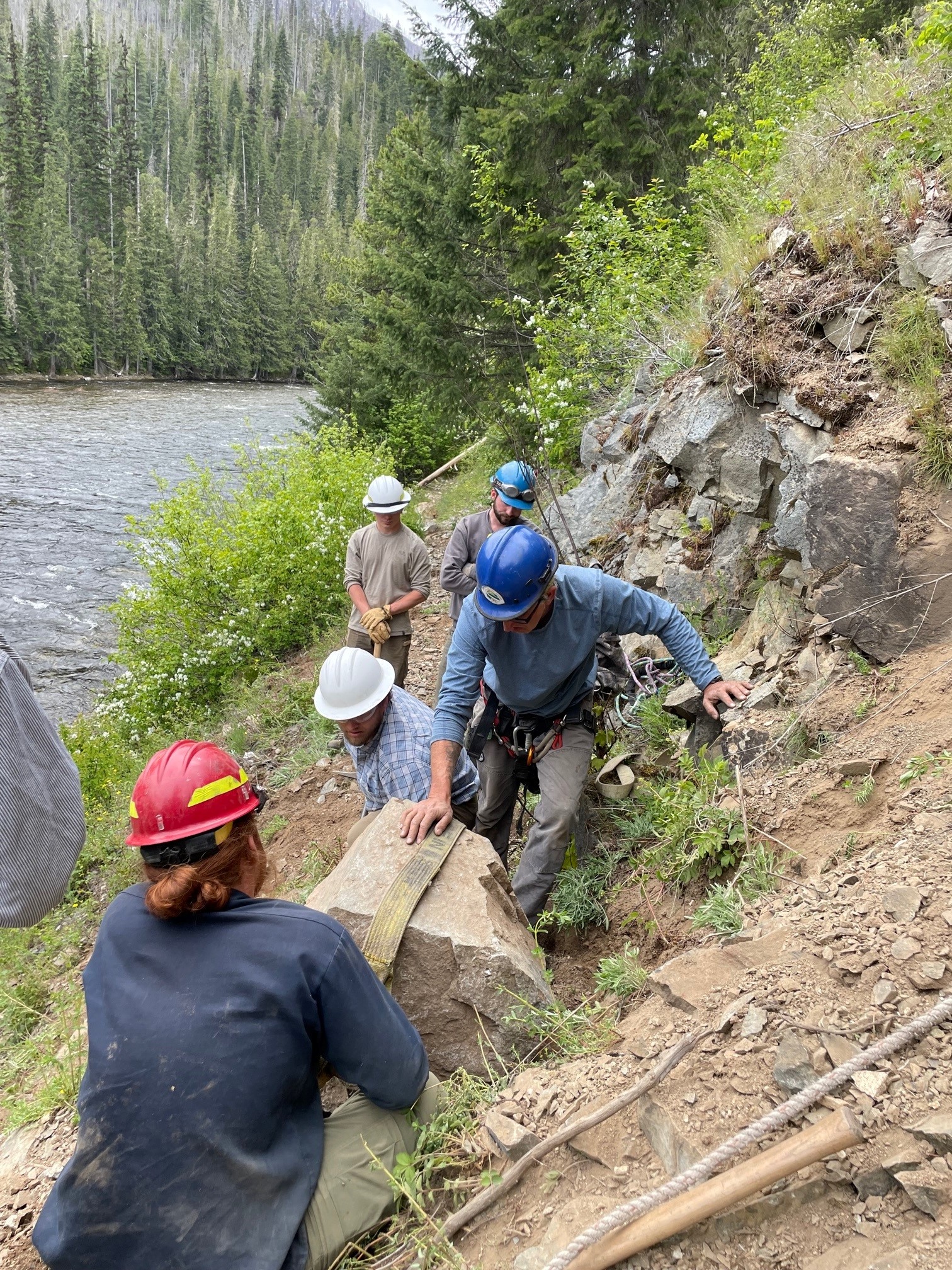
- This advanced course will introduce students to the fundamentals of performing trail bridge inspections, rigging for trail work, and dry-stone masonry. Students will get an overview of stone trail structures, and their design considerations, as well as hands on experience building a rock retaining wall. Students will gain an understanding of simple rigging systems, the equipment and forces involved, and important safety considerations when designing systems.
- The class will begin with the Introduction to TACOS/Trail Bridge App course led by Matthew Able (Acting Washington Office Assistant Trails Program Manager and App Developer) on Monday and Tuesday. Students will be able to further develop their skills conducting trail condition surveys utilizing the new TACOS mobile application, as well as the brand-new Trail Bridge Inspection app. This session will not go into depth on trail bridge inspections, but please contact Carol Hennessey (carol.hennessey@usda.gov) if you have completed the 5-day trail bridge inspection course and need your field certification.
- Wednesday- Friday will provide an overview of rock construction for trail work and the forces and stresses generated during rigging operations, as well as an explanation of common rigging systems for trails projects. Students will apply these skills in the construction of a rock retaining wall, using rigging systems to harvest and transport native stone to the project site.
- The course will be primarily field based with hands-on experiences, so be prepared for field work. Please dress accordingly and be prepared for cold, wet, North Idaho spring weather! Students are expected to provide their own PPE.
- Hard Hat
- Safety Glasses
- Hearing Protection
- Leather gloves
- Long sleeved work-shirt
- Long pants
- Sturdy leather boots
- Other tools and equipment will be provided.
- Class size will be limited.
MONDAY-TUESDAY SESSIONS:
- **NEW for 2026** – Trail and Trail Bridge Mobile Data Collection
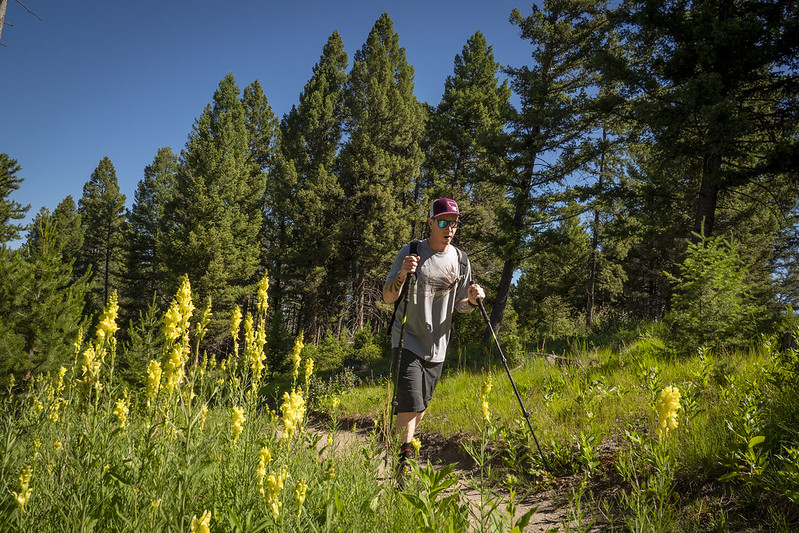 Lead Instructor: Matthew Able (Acting Washington Office Assistant Trails Program Manager and App Developer)
- This course is best suited to participants with at least 1-2 years of trail experience and some familiarity with trail features/trail data needs. Previous trail bridge inspector certification is also recommended but not required.
- This course will review how to conduct trail condition surveys, a yearly FS trail data requirement that guides trail planning and assesses maintenance needs, utilizing the newly developed Trail Assessment and Condition Overview Survey (TACOS) mobile GIS workflow. This is a new digital method utilizing Survey 123 and Esri Field Maps that can be downloaded on a mobile phone or tablet for use in the field. TACOS streamlines data collection by reducing the need for manual data entry and is a valuable tool to record work accomplishments and tasks.
- Participants will gain valuable hands-on, in-person experience with this new mobile tool and its capabilities from the app developer himself! This course will begin in the classroom covering the ins and outs of the process and tools for before, during, and after data collection. Students will also get a chance to practice their skills and use the survey in a field exercise.
- This course will also introduce the new Mobile Bridge Inspection Survey, a similar digital workflow that can be used to record trail bridge inspection information in the field and automatically upload that data to the authoritative FS databases.
- Additional information/pre-work will be sent to participants ahead of the training so you can come prepared with the correct technology/materials.
- Class size may be limited.
- Foundational Wilderness Stewardship
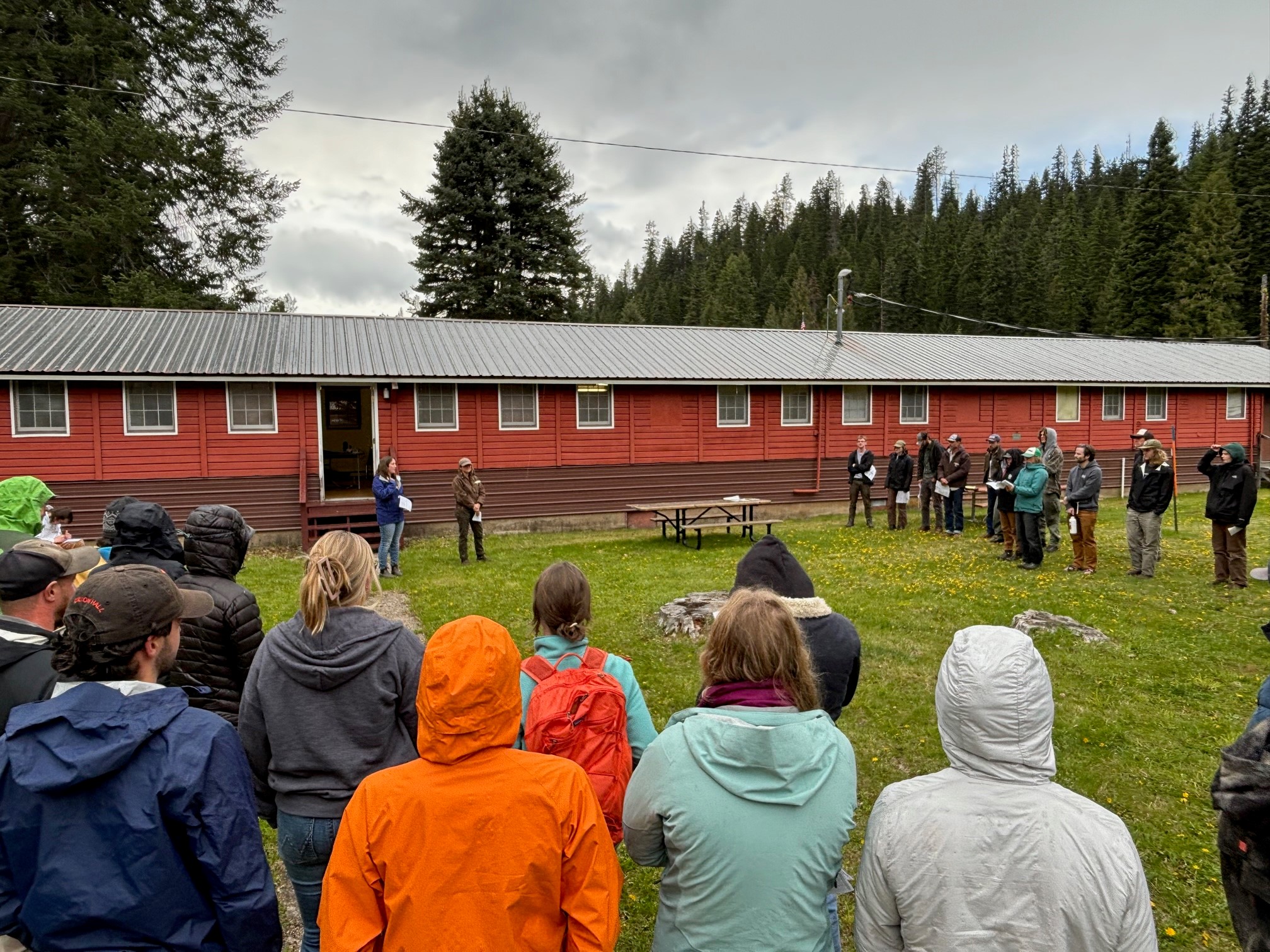 Lead Facilitator: Elena Thomas
- Required Prerequisite: Arthur Carhart National Wilderness Training class “Wilderness Act of 1964” online class.
- This course is targeted to those in their first or second year as a wilderness ranger or a position requiring similar wilderness field skills. Participants will start with a primer on wilderness history and explore how wilderness fits into the bigger picture of different land designations. Participants will begin to explore their own wilderness values and review the diversity of tasks and skills that wilderness rangers utilize during their careers. The course will also cover practical field applications including initiating public contacts, understanding wilderness stewardship performance goals, sharing backpacking tips and tricks, setting up inviting portal signage, naturalizing and monitoring campsites, and more.
- Upon completion of this lesson, participants will:
- Understand and be familiar with Wilderness history and the differences between wilderness and other unique land designations.
- Be able to assess their own skill set and wilderness values and identify potential trainings that will assist in their professional development as wilderness stewards.
- Understand communication skills to make educational contacts in the field more effective.
- Understand the national framework for measuring Wilderness Stewardship Performance measures.
- Class size may be limited.
- Values-Based Leadership in Conservation: Defining Your Leadership Signature
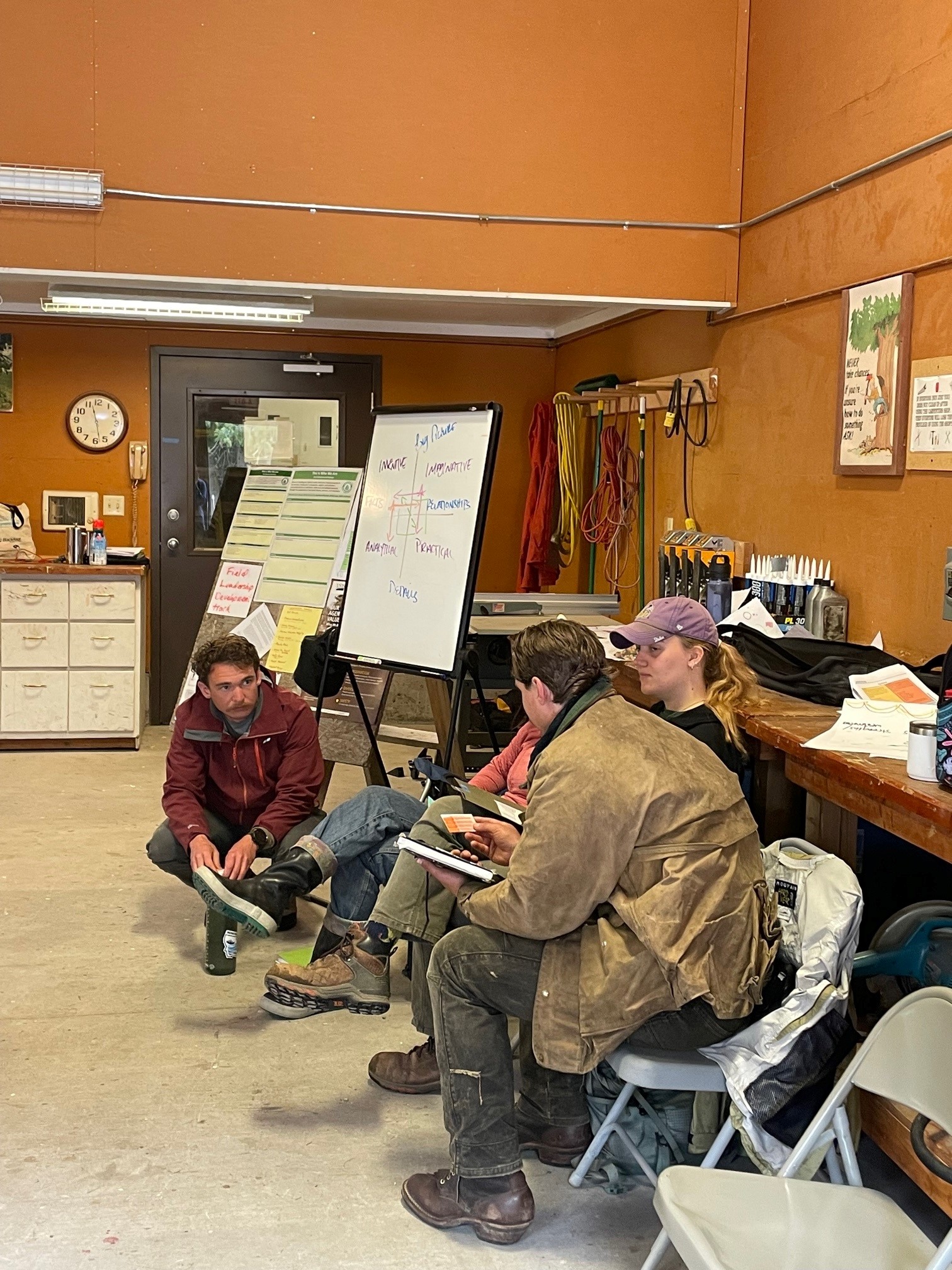 Lead Instructor: Colter Pence and Shannon Stober (TBD)
- Target participants are field leaders, those who lead in the field/backcountry situations, and/or are in situations to fill in or support other leaders. Also encouraged to apply are those who have participated in NRWSI sessions in previous years and/or have been recruited to be an instructor supporting another track this year and are ripe for interpersonal development.
- Effective leadership in conservation goes beyond technical expertise—it is driven by values. This 1.5-day immersive training helps leaders explore how values shape decisions, team culture, and public service in the field. Through reflection, discussion, and practical exercises, participants will learn to identify their unique leadership signature, apply their values in leadership, navigate ethical dilemmas, and build stronger teams aligned with conservation principles.
- Participants will:
- Clarify their personal and professional leadership values and how they shape decisions.
- Discover their unique leadership signature and how it influences their leadership approach.
- Align team culture and agency priorities with values-driven leadership.
- Navigate ethical dilemmas and conflicts when values are challenged.
- Develop communication and facilitation skills to reinforce shared values.
- Connect leadership to the broader purpose of conservation and public service.
- Upon successful completion, participants will receive a Certificate of Completion from Jump Start Training and Development, recognizing their commitment to values-based leadership.
- Prework: A short reflection activity will be sent to registered participants prior to the week before NRWSI. This activity will take no more than 1 hour of preparation time. Conversations will be held in session regarding the results of this pre-work.
- This session will be taught both inside and outside of the classroom. Be prepared to spend up to 4 hours outside doing moderate physical level tasks in inclement conditions. No specialty tools nor PPE will be needed. Students are encouraged to bring their own thumb/jump drives, and the instructors will share presentation and resource materials with them.
- Class size will be limited.
- Trail Maintenance Foundational Skills
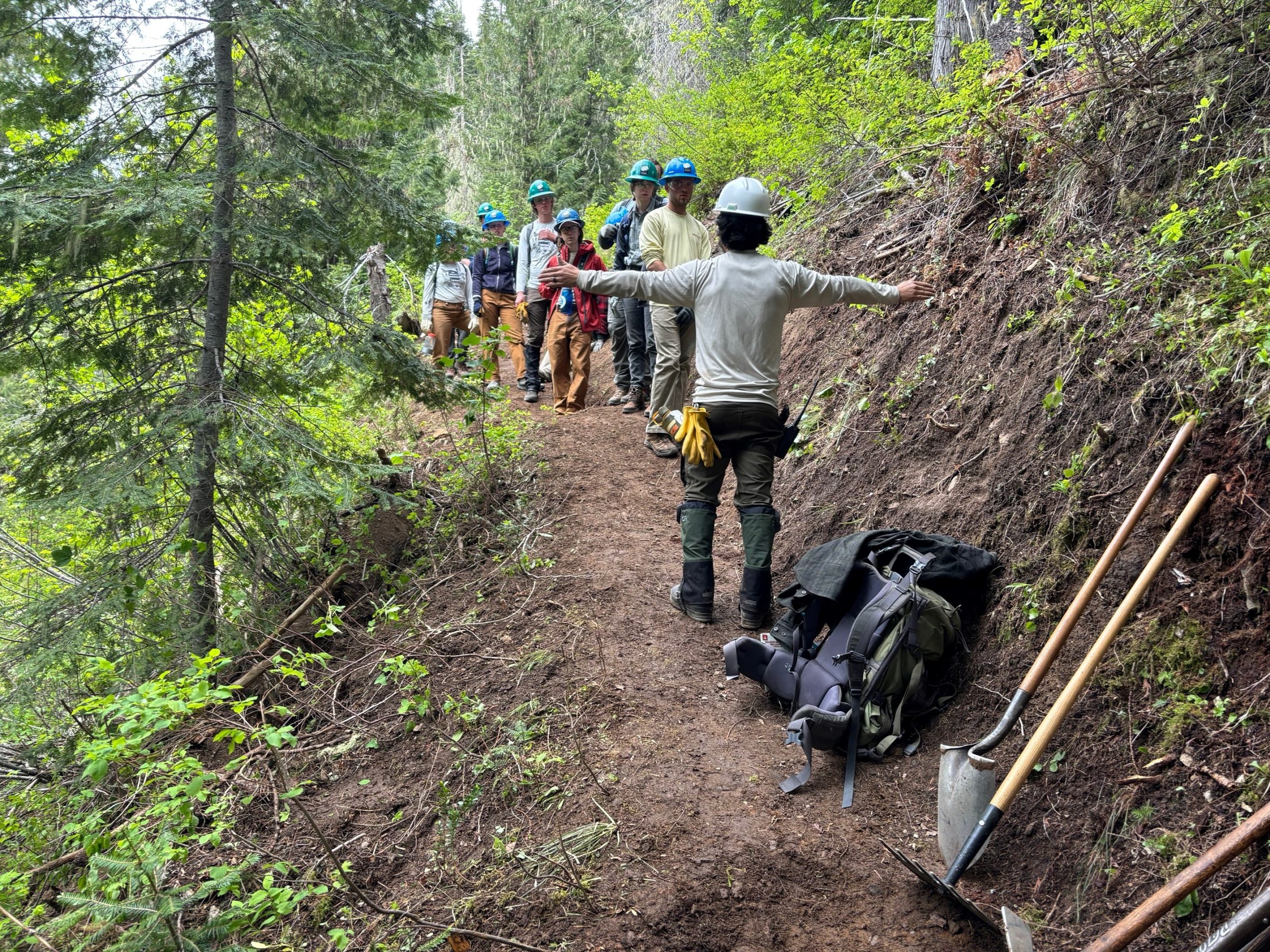 Lead Instructors: Mark Smith, Josh Page, Alex Cravener
- This session is structured primarily for those with 0-1.5 seasons of trail maintenance experience. Folks with higher experience are welcome to attend but are encouraged to explore other NRWSI course options.
- This session focuses on the basic skills and concepts needed to safely and efficiently perform trail maintenance in the field. This session will focus on each of those aspects besides the crosscut saw and ax, as those skills will be discussed in depth in the crosscut A/B course. It will go over many traditional tools and their uses for trail maintenance, how to safely and effectively use each tool, cover the specifications to which trail maintenance is done on USFS lands, and touch on different ways this work is performed. Some trail skills that will be highlighted include brushing, basic tread work, erosion and water management (water bars and drains), and proper corridor specifications. This course will be 2.5 hours of classroom time on the first day, followed by a full day in the field applying and practicing these skills on the second day. Participants should be prepared to spend up to 8 hours on trail hiking and performing trail maintenance on Tuesday, 5/19/26.
- Dress for the weather. Some lessons are taught outside as wilderness intended. We will be outside rain, shine, snow, hail, sleet, cats and dogs, whatever gets thrown at us!
- Upon completion of this lesson, participants will:
- Become knowledgeable in common trail maintenance tools and their intended use
- Be proficient at selecting the right tool for the job, using each tool safely, and using each tool effectively.
- Become familiar with annual maintenance and trail corridor specifications, as set by the U.S. Forest Service.
- Have a comprehensive understanding on how to plan and execute a full day of trail maintenance in relation to the topics covered in this course.
- Know how to keep tools in working order while in the backcountry, and how to perform basic stopgaps to keep tools in operation throughout a project.
- Class size will be limited.
- First Aid/CPR
 Lead Instructor: Clint Mendenhall
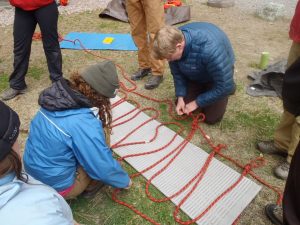
- This is a classroom instructor-led course that teaches students critical skills to respond to and manage an emergency in the first few minutes until emergency medical services (EMS) arrives. Students will learn skills such as how to treat bleeding, broken bones, shock, choking, CPR, AED, and other first aid emergencies. This course satisfies a two-year recertification requirement.
- Participants will also receive training in accident mitigation, communication procedures, and risk management.
- Class size will be limited.
- Defensive Horsemanship
 Lead Instructor: Robin Connell
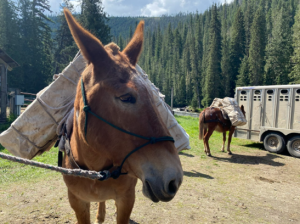
- The Basic Horsemanship class will result in participants being certified for 8 hours of required horsemanship training. The course will review the basics of horsemanship and provide an excellent refresher for those with more experience. The course will be field-based and hands-on, so be prepared for field work. Please dress accordingly and be prepared for cold, wet, North Idaho spring weather!
- The course will include a short classroom introduction covering the course objectives of how to effectively work with and around stock in a safe manner. This indoor session will include a discussion on equine psychology and how to work safely with horses and mules. Following this short indoor orientation, the remainder of the class will be a hands-on demonstration at the Powell barn. Outdoor topics include catching, tying, grooming, feeding, and camping with stock. The remainder of the class will focus on packing and handling skills.
- This course will provide a brief review of the basics of horsemanship, working with ropes, knot-tying, skills for assisting packers, packing skills pertinent to loading animals, and preparing gear to be packed in. The course will be hands-on and field oriented.
- Class size may be limited.
WEDNESDAY-THURSDAY-FRIDAY SESSIONS:
- Adaptive Leadership for the Field
 Lead Instructor: Colter Pence and Shannon Stober (TBD)
- Target participants are emerging field leaders, those who are leading field crews and/or are in situations to fill in or support other leaders. Also encouraged to apply are those who have participated in NRWSI sessions in previous years and/or have been recruited to be an instructor supporting another track this year and are ripe for interpersonal development.
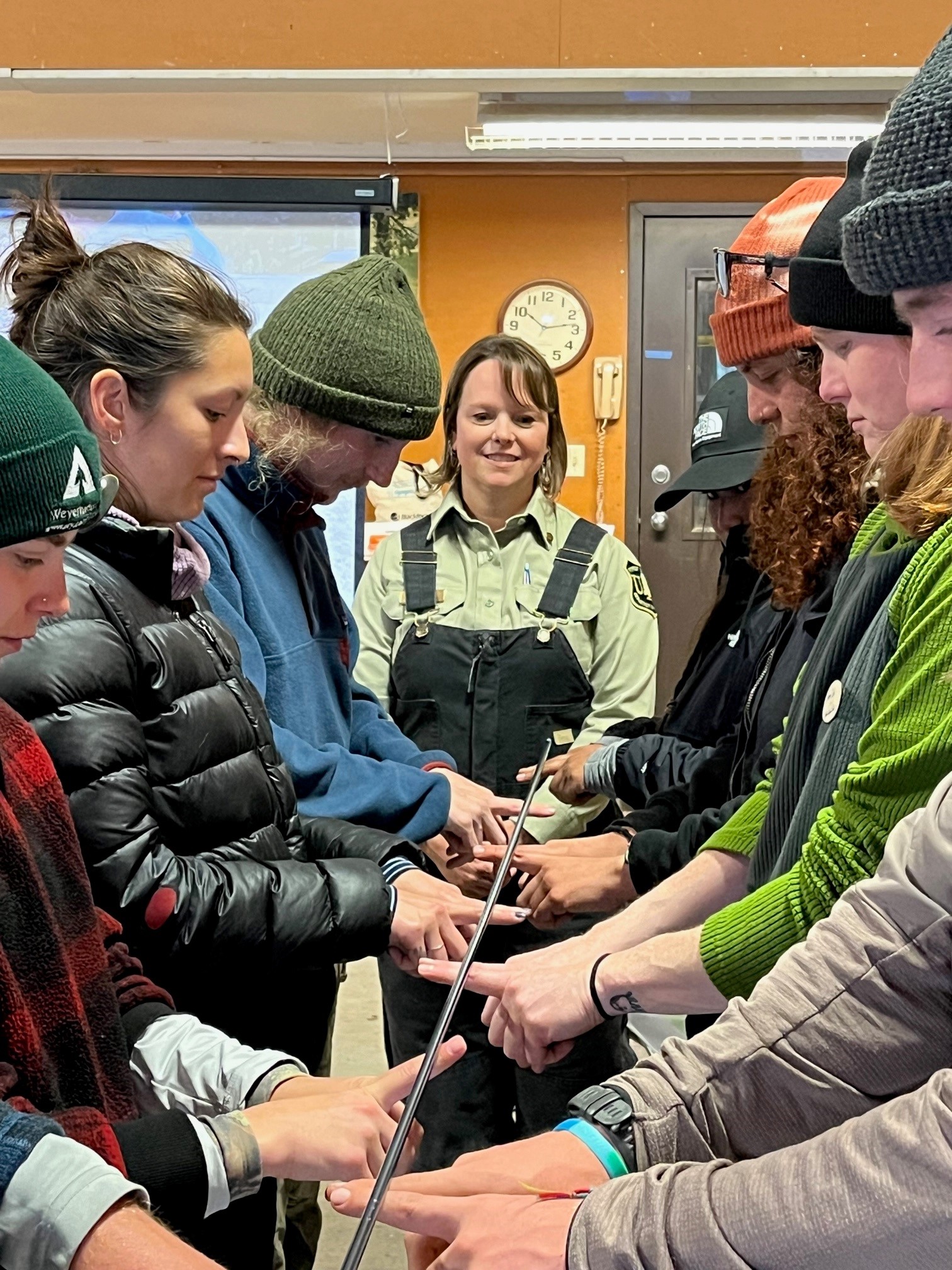
- Adaptive leadership is essential for field leaders who navigate unpredictable conditions, shifting team dynamics, and complex challenges. This 2.5-day intensive training equips participants with the skills to analyze environments, adjust strategies, and lead effectively under pressure.
- Participants will:
- Develop a flexible leadership approach tailored to changing circumstances.
- Enhance decision-making skills in uncertain environments.
- Build resilience in leadership through coaching, feedback, and group processing.
- Strengthen their presence and communication to lead with clarity and confidence.
- Apply leadership skills in real-world scenarios, debriefing and refining their approach.
- Upon successful completion, participants will receive a Certificate of Completion from Jump Start Training and Development, recognizing their commitment to values-based leadership.
- Prework: A short reflection activity will be sent to registered participants prior to the week before NRWSI. This activity will take no more than 1 hour of preparation time. Conversations will be held in session regarding the results of this pre-work.
- This session will be taught both inside and outside of the classroom. Be prepared to spend up to 4 hours outside doing moderate physical level tasks in inclement conditions. No specialty tools nor PPE will be needed. Students are encouraged to bring their own thumb/jump drives, and the instructors will share presentation and resource materials with them.
- Class size will be limited.
- Advanced Wilderness Stewardship
 Lead Facilitator: M.J. Crandall
- Required Prerequisite: Arthur Carhart National Wilderness Training class “Wilderness Act of 1964” online class.
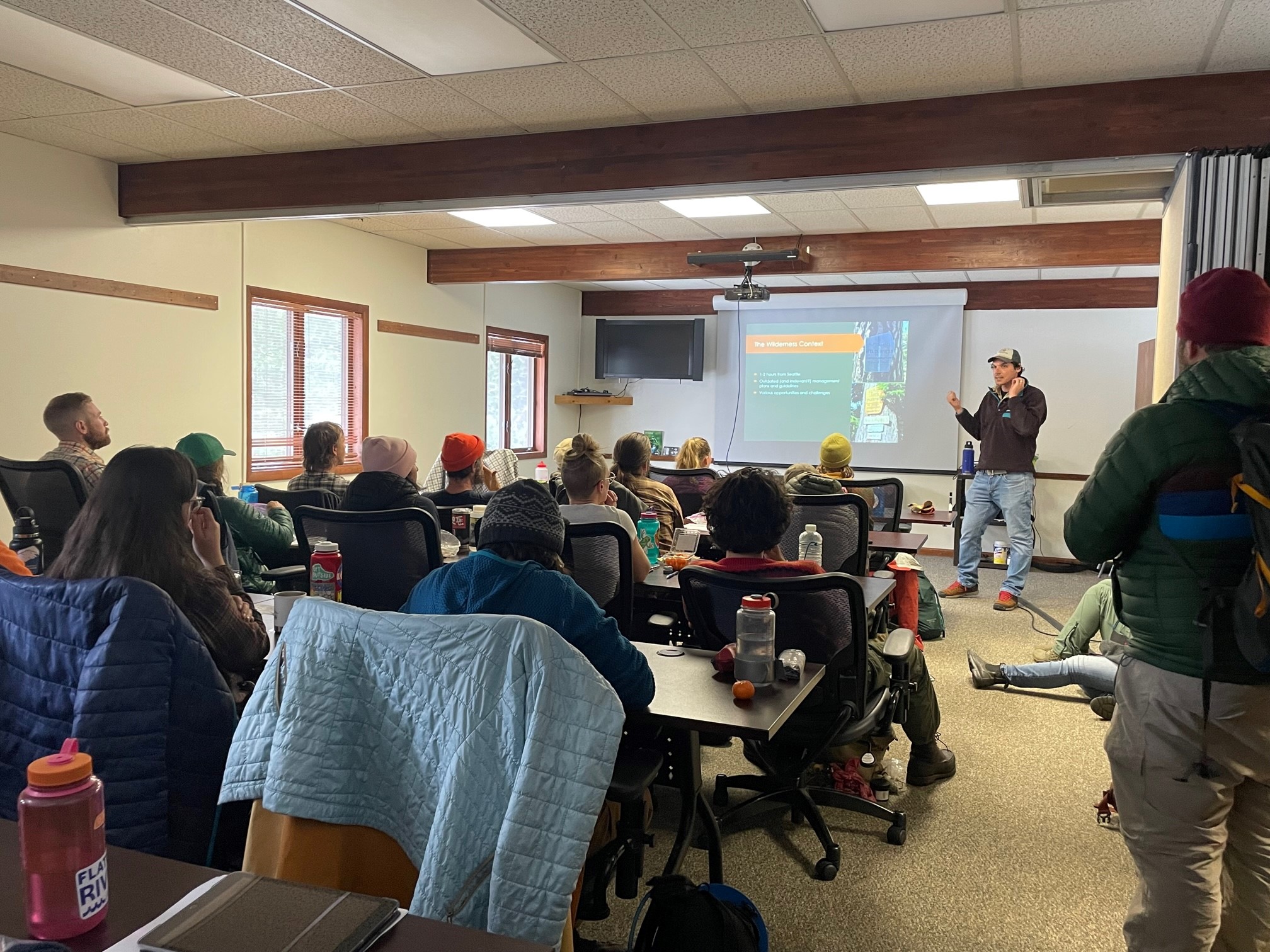
- This session convenes more experienced wilderness stewards to explore concepts, skills, and tools that will deepen their understanding of this work and improve performance. It will take a deeper dive into wilderness management concepts including wilderness values, wilderness stewardship performance, wilderness character monitoring, wilderness fire policy and current research. Applied topics will include how to bring wilderness education into the classroom, how to develop a program of work based on WSP elements, an introduction to the Minimum Requirements Analysis Framework, how to conduct an effective outfitter guide inspection, and how to use mobile GIS for monitoring data collection and analysis. The session will also offer participants time to share challenges they may be facing in their work, as well as canvas the experience within the group to identify possible solutions or other useful available resources.
- Upon completion of this lesson, participants will:
- Come away with tools to both identify and track developmental training relevant to wilderness stewardship career goals.
- Understand and be familiar with Wilderness Stewardships Performance Measures and how to translate those elements into an integrated program of work.
- Understand how to initiate and evaluate the effectiveness of wilderness education programming in classroom settings.
- Learn what a minimum requirement analysis is, when it is used and explore situations where it would be appropriate to use.
- Become familiar with references for contemporary wilderness research and review some interesting Wilderness research in the works.
- Understand and be familiar with wilderness fire management policy.
- Understand the prework that is critical for conducting outfitter guide inspections.
- Depart with a broader set of resources and contacts for advancing their knowledge and skills as effective wilderness stewards.
- Class size may be limited.
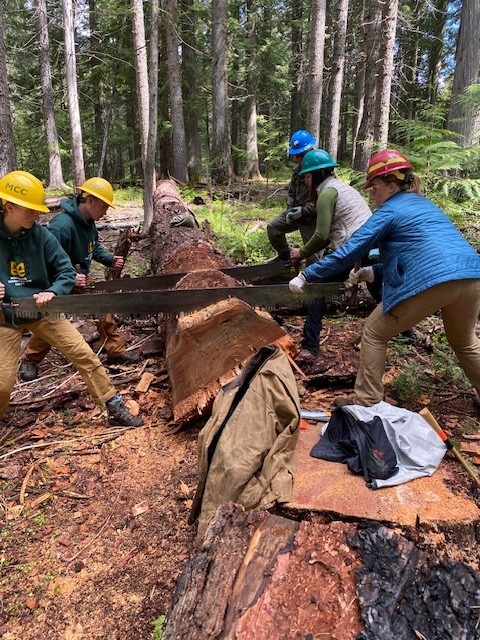
- Crosscut Saw B Bucking, A Falling
 Lead Facilitator: Adam Washebek, others TBD
- Required Prerequisite: Current First Aid/CPR completed prior to the start of the course.
- The A/B Crosscut Certification Course provides students with both classroom-based instruction and field experience in the use of the crosscut saws and axes. Students will learn how to safely utilize these tools in a trail maintenance capacity. The course will cover tool history, best practices in the field, instruction in tool use in the field, tool care, safety, and transportation of the tools. Successful completion of this course is required to use these tools on national forest lands while participating in stewardship efforts.
- Wednesday AM will be in a classroom otherwise this is a field-based course so come with appropriate outdoor gear and a sack lunch for Wednesday and Thursday and be prepared for inclement weather. Please bring PPE, crosscut saws, axes, wedges, handsaws, your favorite digging accessories, etc. from your home unit’s cache.
- Class size may be limited.
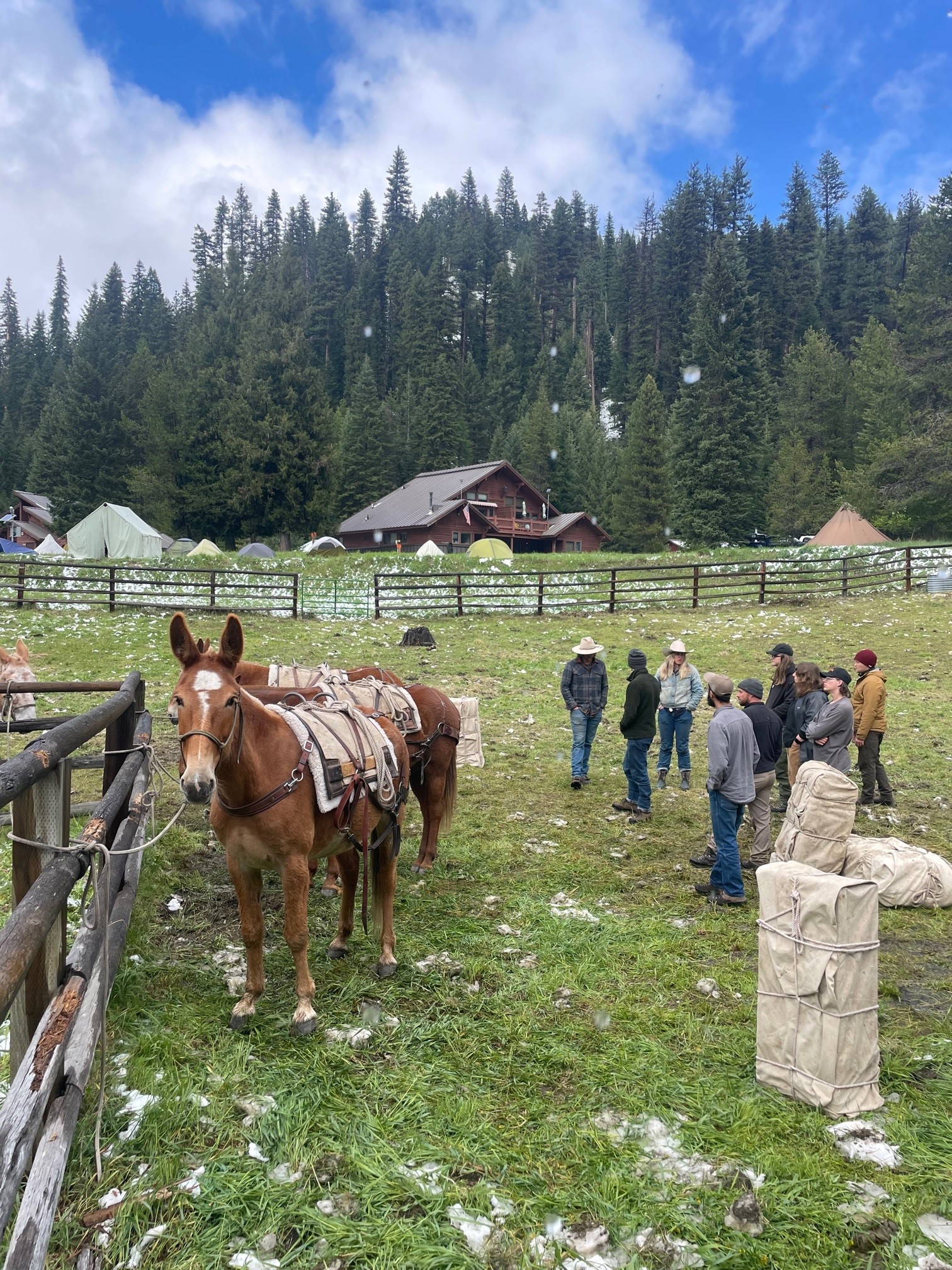
- Defensive Horsemanship
 Lead Instructor: Robin Connell
- The Basic Horsemanship class will result in participants being certified for 8 hours of required horsemanship training. The course will review the basics of horsemanship and provide an excellent refresher for those with more experience. The course will be field-based and hands-on, so be prepared for field work. Please dress accordingly and be prepared for cold, wet, North Idaho spring weather!
- The course will include a short classroom introduction covering the course objectives of how to effectively work with and around stock in a safe manner. This indoor session will include a discussion on equine psychology and how to work safely with horses and mules. Following this short indoor orientation, the remainder of the class will be a hands-on demonstration at the Powell barn. Outdoor topics include catching, tying, grooming, feeding, and camping with stock. The remainder of the class will focus on packing and handling skills.
- This course will provide a brief review of the basics of horsemanship, working with ropes, knot-tying, skills for assisting packers, packing skills pertinent to loading animals, and preparing gear to be packed in. The course will be hands-on and field oriented.
- Class size may be limited.